
The London School of Massage offers professional massage training and complementary therapy courses.
Contact us to learn more about our courses, events, and industry news.
The London School of Massage offers professional massage training and complementary therapy courses.
Contact us to learn more about our courses, events, and industry news.
The VTCT (ITEC) Level 4 Sports Massage Course is an advanced qualification for Level 3 Sports Massage Therapists who want to develop their assessment, clinical reasoning and treatment skills.
Building on Level 3 Sports Massage training, the course develops a more structured approach to subjective and objective assessment, postural observation, palpation, orthopaedic testing, treatment planning and the management of common soft tissue injuries and dysfunction.
Students learn how to assess the presenting problem, recognise indications and contraindications, establish suitable treatment objectives and apply advanced sports massage techniques within their professional scope of practice.
Practical training includes deep tissue massage, Neuromuscular Technique, trigger point therapy, Muscle Energy Technique, Proprioceptive Neuromuscular Facilitation, Soft Tissue Release and passive articulation of major peripheral joints.
Successful students receive the VTCT (ITEC) Level 4 Certificate in Sports Massage, an Ofqual-regulated qualification designed for qualified Sports Massage Therapists progressing into more advanced professional practice.
Graduates can work within the scope of a Level 4 Sports Massage Therapist or progress to the VTCT (ITEC) Level 5 Sports Massage Course.
London School of Massage has delivered professional massage and complementary therapy training since 1994 and has trained more than 30,000 students. Level 4 training is delivered by experienced lecturers who are qualified Sports Massage Therapists and Osteopaths, combining clinical knowledge with extensive teaching and assessment experience.
Learn more about why students choose London School of Massage.
This course is suitable for qualified Level 3 Sports Massage Therapists who want to:
This is not a beginners’ sports massage course.
Applicants without a Level 3 Sports Massage qualification should first complete either the VTCT (ITEC) Level 3 Sports Massage Course for Beginners or, if already qualified in massage, the VTCT (ITEC) Level 3 Sports Massage Bridging Course.
This course forms part of London School of Massage’s wider range of Sports Massage courses in London, with training routes available at Levels 3, 4 and 5 for beginners and qualified therapists.
This quick guide summarises the main course and qualification information.
| Course name | VTCT (ITEC) Level 4 Sports Massage Course |
| Qualification | VTCT (ITEC) Level 4 Certificate in Sports Massage |
| Qualification level | Level 4 RQF |
| Qualification number | 603/4497/0 |
| Qualification type | Ofqual-regulated professional qualification |
| Awarding organisation | VTCT Skills under the ITEC brand |
| Suitable for | Qualified Level 3 Sports Massage Therapists |
| Study format | Blended learning |
| Theory delivery | Guided study and live online teaching |
| Practical delivery | Face-to-face classroom training |
| Training location | London School of Massage, Caledonian Road near King’s Cross |
| Coursework | Case studies, treatment logs and written assignment |
| Final assessment | Practical examination |
| Theory examination | No separate theory examination |
| Included | Digital course materials, demonstration videos, tuition and scheduled examination fees |
| Progression | VTCT (ITEC) Level 5 Sports Massage and relevant advanced CPD training |
Level 3 Sports Massage provides the foundation for consultation, general assessment, maintenance massage and pre-event and post-event treatments.
Level 4 develops this foundation through more detailed:
The course enables therapists to make better-informed treatment decisions while recognising when treatment is unsuitable or referral is required.
Students who have not yet completed Level 3 should review the Sports Massage Therapist training pathway.
The course combines:
Online learning develops the theory and regional anatomy required for assessment and treatment. Face-to-face classes concentrate on practical assessment, orthopaedic testing, treatment planning and advanced sports massage techniques.
Students must attend all compulsory online, practical and assessment sessions.
Face-to-face training takes place at London School of Massage’s Caledonian Road centre near King’s Cross.
Students travelling to the course can view the school’s training venues, directions and travel information and nearby accommodation information.
The course fee includes:
Students may need to provide suitable practical clothing, towels, treatment products, case-study volunteers and an appropriate model for the practical examination.
Full requirements and assessment arrangements are explained during the course.
This Level 4 Sports Massage Course is ELCAS approved.
Eligible service personnel may apply through the Enhanced Learning Credits Administration Service using London School of Massage provider number 11265.
ELCAS funding is subject to current scheme rules, individual eligibility and approval before the course begins.
The course develops the assessment, treatment-planning and practical skills required for Level 4 Sports Massage practice.
Students learn how to:
Students develop their understanding of:
This knowledge is applied directly to assessment and treatment planning.
Students learn how to complete a structured assessment that includes:
Assessment findings are used to determine whether treatment is suitable and to establish appropriate treatment objectives.
Students develop practical skills in observing:
Appropriate orthopaedic tests are used to assess possible muscle, tendon, ligament or joint involvement.
Tests are considered alongside the client history and wider assessment findings and are not used in isolation to provide a medical diagnosis.
Students examine common presentations such as:
Training includes treatment considerations, contraindications, red flags and referral procedures.
Practical training includes:
Spinal manipulation is not taught.
Students learn how to apply:
These techniques are adapted to the client’s presentation and stage of recovery.
Students develop an understanding of acute soft tissue injuries, including muscle strains and ligament sprains.
Training includes:
Students learn how to:
All treatment must remain within the therapist’s training, competence and insurance cover.
Students complete:
Templates and guidance are provided. All coursework must be completed by the stated deadline before the final practical examination.
Applicants must normally:
Suitable entry qualifications may include:
A general Level 3 Massage qualification without Sports Massage does not normally provide direct entry to Level 4.
Qualified massage therapists who do not yet hold Level 3 Sports Massage should first complete the VTCT (ITEC) Level 3 Sports Massage Bridging Course.
Applicants without any previous massage qualification should begin with the VTCT (ITEC) Level 3 Sports Massage Course for Beginners.
Applicants holding a different sports massage, sports therapy or overseas qualification should send the following before booking:
Acceptance is not automatic and must be confirmed before enrolment.
The Level 4 course assumes that students are already competent in:
These foundation subjects are developed at Level 4 but are not retaught from the beginning.
Students must be able to understand sports massage terminology, regional anatomy, assessment procedures and written course materials.
They must also be able to communicate clearly with clients and complete assignments, case studies and assessment documentation in English.
Basic computer skills are required for:
Level 4 Sports Massage training is physically active. Students work on one another under tutor supervision and may need to expose the body area being assessed or treated.
Professional draping is used throughout to protect dignity and privacy.
Students with an injury, health condition, disability, pregnancy or another circumstance that may affect participation should contact London School of Massage before booking.
Reasonable adjustments may be considered where appropriate but essential practical and assessment requirements must still be met.
Recognition of prior learning may be considered where an applicant has already completed relevant regulated units.
Any exemption, credit transfer or recognition of previous achievement is subject to current VTCT/ITEC requirements and approval before the course begins.
Students are assessed through:
There is no separate theory examination for this Level 4 qualification.
The practical examination assesses the student’s ability to conduct an appropriate assessment, interpret the findings, plan a treatment and apply suitable Level 4 Sports Massage techniques.
The practical assessment normally includes:
The confirmed assessment date and full examination requirements are provided during the course.
Students complete five case-study clients.
Each client receives two recorded treatments, producing:
Each case study should demonstrate appropriate:
Students also complete a log of 15 additional sports massage treatments.
The treatment log provides evidence of wider practical experience and helps students develop confidence in adapting assessment and treatment to different clients and presentations.
Students complete an assignment on:
Treatment Modalities to Support Soft Tissue Repair
The assignment develops understanding of soft tissue healing and the safe use of appropriate treatment modalities, including heat and cold.
Guidelines and templates are provided.
All assignments, case studies and treatment logs must be completed by the stated submission deadline and normally at least one week before the final practical examination.
Students who do not submit satisfactory coursework may not be eligible to complete the final assessment or receive the qualification.
Successful students receive the:
VTCT (ITEC) Level 4 Certificate in Sports Massage
Certificates are issued after all practical assessments, coursework and quality-assurance requirements have been completed successfully and processed by VTCT/ITEC.
Further information about the school’s awarding organisation and professional approvals is available on the London School of Massage Accreditations and Approvals page.
Level 4 Sports Massage Therapists may assess and treat appropriate soft tissue injuries and dysfunction within their training, competence and insurance cover.
They must not:
Clients should be referred to an appropriate healthcare professional where symptoms are unexplained, severe, worsening or outside the therapist’s scope.
After successful certification, graduates should update or obtain suitable professional indemnity and public liability insurance covering Level 4 Sports Massage assessment and treatment.
Insurance requirements vary. Therapists should confirm that their qualification, assessment methods and intended treatment techniques are covered before practising professionally.
Further information is available on the school’s Therapist Insurance page.
After qualifying and obtaining appropriate professional insurance, graduates may work within the scope of a Level 4 Sports Massage Therapist.
Potential working environments include:
Level 4 qualification holders can also add more advanced assessment and soft tissue treatment services to an existing Level 3 Sports Massage practice.
Employment and professional-body requirements vary. Graduates should confirm any additional requirements relevant to the workplace, role or organisation.
Level 4 training enables therapists to take a more structured approach to:
The qualification does not make the therapist a physiotherapist, osteopath, doctor or other regulated healthcare professional.
The natural qualification progression is the VTCT (ITEC) Level 5 Sports Massage Course.
Level 5 develops more advanced assessment, treatment and rehabilitation-related skills for qualified Level 4 Sports Massage Therapists working with more complex musculoskeletal presentations.
Students can view the complete Sports Massage Therapist training pathway.
Qualified therapists may also broaden their practical skills through carefully selected advanced and CPD courses.
The Dynamic Assisted Stretching Course develops passive, dynamic and isometric assisted-stretching techniques that can complement sports massage practice.
The Trigger Point and Stretch Massage Therapy Course provides further practical development in trigger point work and applied stretching.
The Spinal Articulation and Mobilisation Course introduces qualified therapists to safe spinal and peripheral joint articulation and mobilisation methods within an appropriate professional scope.
The Kinesiology Taping Course teaches the theory and practical application of kinesiology tape for suitable musculoskeletal presentations.
The Advanced Therapeutic Massage Diploma develops individualised treatment planning, postural observation and advanced therapeutic massage skills.
The Cupping Therapy Massage Course introduces safe and appropriate cupping applications for qualified massage therapists.
Entry requirements and insurance implications should be checked before booking any advanced or CPD course.
London School of Massage offers:
Learn more about why qualified therapists train with London School of Massage.
The VTCT (ITEC) Level 4 Certificate in Sports Massage is an advanced qualification for existing Level 3 Sports Massage Therapists. It develops more detailed assessment, clinical reasoning, treatment planning and practical skills for working with appropriate soft tissue injuries and dysfunction.
Applicants must be aged 18 or over and normally hold a recognised Level 3 Diploma in Sports Massage or an accepted equivalent or higher sports therapy qualification. A general Level 3 Massage qualification alone does not normally provide direct entry to Level 4.
Successful students receive the VTCT (ITEC) Level 4 Certificate in Sports Massage, qualification number 603/4497/0. It is an Ofqual-regulated professional qualification awarded by VTCT Skills under the ITEC brand.
Students learn regional musculoskeletal anatomy, subjective and objective assessment, postural observation, palpation, range-of-movement testing, orthopaedic testing, soft tissue injury management, clinical reasoning, treatment planning, reassessment and professional referral.
Practical training includes deep tissue massage, trigger point therapy, neuromuscular techniques, Muscle Energy Technique, PNF stretching, Soft Tissue Release, passive stretching and peripheral joint articulation. Spinal manipulation is not taught.
Yes. Classes are open to all genders and students normally work in pairs during practical training. Students may be required to expose the body area being assessed or treated but professional conduct, appropriate draping, privacy and student dignity are maintained throughout.
Students who are unable to participate fully because of an injury, medical condition, pregnancy, disability or another circumstance should contact London School of Massage before booking.
London School of Massage provides professional massage couches and classroom equipment for practical training. Students normally work with one another during classes, taking turns to practise techniques and receive treatment.
Students must arrange suitable adult volunteers for their case studies and bring their own suitable adult model on the day of the practical examination.
Assessment includes a 60-minute practical exam assessed by an external ITEC examiner, 10 case study treatments, 15 additional treatment logs and one written assignment on treatment modalities to support soft tissue repair.
No. There is no theory exam for the Level 4 Sports Massage course. Students are assessed through practical examination, coursework, case studies and treatment logs.
Students complete 5 clients with 2 treatments each, making 10 case study treatments in total. They also complete a treatment log of 15 additional treatments.
Yes. Qualified students can usually apply for or update professional malpractice insurance after certification. Therapists should check individual insurance provider requirements before practising advanced Level 4 techniques professionally.
London School of Massage has been delivering professional massage and complementary therapy training since 1994 and has trained over 30,000 students. This course is taught by experienced lecturers with professional knowledge of sports massage, injury assessment, anatomy, advanced soft tissue techniques, safe practice and client care.
Course Dates:
Part 1) 28th - 29th November (Online Zoom, 9:30am - 12:30pm approx.)
Part 2) 5th - 6th December (Online Zoom- 9:30am - 12:30pm approx.)
Part 3) 10th - 14th December (Kings Cross, Caledonian Road- 9:30am - 5:00pm apporx.)

Advanced Sports Massage Assessment and Treatment Qualification
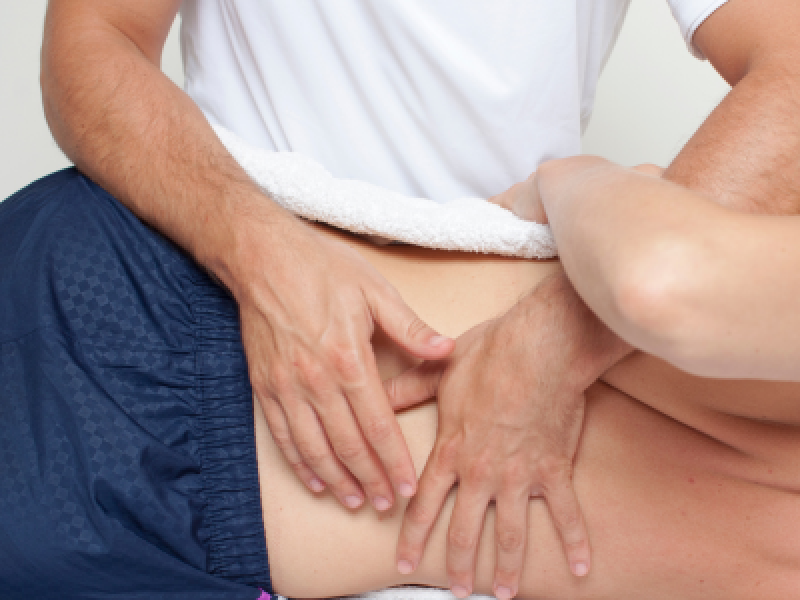
Develop safe spinal assessment, articulation and mobilisation skills through two days of supervised practical training.
Learn a complete table-based Dynamic Assisted Stretching routine through professional hands-on training.


 Search...
 Introduction
 Course Overview & Study Options
 FAQ
FAQ
 Course Dates and Bookings
