
The London School of Massage offers professional massage training and complementary therapy courses.
Contact us to learn more about our courses, events, and industry news.
The London School of Massage offers professional massage training and complementary therapy courses.
Contact us to learn more about our courses, events, and industry news.
Qualification Code: QAN 603/4094/0
This Reflexology Diploma course is open to those who hold a Diploma and/or Certificate in Anatomy, Physiology & Pathology (Level 3 RQF or above) within the last 3 years.
A fast-track intensive course, it is offered via hybrid learning with a blend of online and practical classes.
You will learn the principles of reflexology, a holistic therapy based on the idea that the feet and hands contain reflex zones that correspond to all the organs and systems of the body. Through careful observation and mapping of these reflex areas, you’ll develop the skills to identify imbalances and apply specific techniques to stimulate the body’s natural healing processes. By working on these reflex points, reflexology helps to restore balance, reduce stress and support overall health and wellbeing.
View our Reflexology course training flow chart to see exactly how you can progress from your first class to earning your ITEC diploma award in Reflexology - opening opportunities to work in spas or wellness centres or start your own holistic therapy practice.
 CLICK HERE TO SEE A FLOW CHART FOR PROGRESSION IN THIS REFLEXOLOGY COURSE
This VTCT (ITEC) Reflexology course is open to beginners as well as qualifed therapists.
Qualified Therapists who enrol via the Upgrade Option must hold an OFQUAL accredited (or equivalent) Level 3 Diploma in Anatomy, Physiology and Pathology - equivalent or higher within the last three years.
If you are unsure, please e-mail us a copy of your qualifications, and we can advise you if it's accepted for this course.
The course does involve written work and computer work, and students are requested to have access to a PC or laptop.
The level of English recommended for overseas students is IELTS level 6-7 or equivalent, but this is not a strict requirement.
Applicants must be over 18.
Our Reflexology courses are approved by VTCT (ITEC) and are recognised nationally and worldwide.

This Reflexology course covers all syllabus criteria required by ITEC and VTCT. Training is structured to maximise learning during online theory sessions, and practical skills are developed in person through our massage classes, where techniques are taught through demonstration, practice and repetition.
iUCT21 – Provide Reflexology for Complementary Therapies
History, theory, and philosophy of reflexology
Techniques of reflexology
External reading of the feet
Reflexology technique and sequence
Interpretation of reflexes
Zones and their relation to organs and functions
Referral areas / cross-references
The holistic approach
Contraindications to reflexology
Introduction to hand reflexology
Concepts and theories explaining how and why reflexology works
Client reactions – during and between treatments
Consultations and record-keeping
Common disorders and diseases
Devising a treatment programme
Home care advice
We provide written materials and quizzes to support your learning and revision.
You will be required to complete 100 reflexology treatments, including:
10 x 4 – 10 clients, 4 treatments each
60 x 1 – 60 clients, 1 treatment each
Templates and guidelines will be provided. Case studies must be completed in your own time, using friends, family, or colleagues.
Assignment 1: iUCT21 – Principles and Practice of Complementary Therapies
Assignment 2: iUCT34 – Business Practice for Complementary Therapies
These are written assignments. We provide templates and clear guidance to support you in completing them.
Students have six months from the start of the course to complete their case studies and assignments.
ITEC operates a 3-year RPL (Recognition of Prior Learning) policy. If you have completed any of the following units as part of another ITEC qualification within the last three years, you may be eligible to apply for exemption or mark transfer via ITEC RPL.
If you have not completed these units, or if your previous qualification is older than three years, you will be required to complete the following:
iUCT21 – Principles and Practice of Complementary Therapies (assignment)
iUCT34 – Business Practice for Complementary Therapies (assignment)
iUCT38 – Knowledge of Anatomy, Physiology and Pathology for Complementary Therapies (theory exam)
Please contact us with a copy of your qualification so we can verify your eligibility.
Please refer to our FAQs if you have any questions.
This section outlines the assessment requirements for the VTCT (ITEC) Level 3 Diploma in Reflexology, including theory exams, practical assessment and coursework completion.
Structure: Practical exam
Pass Mark: 50%
Length: 60 minutes
Assessed by an external examiner from ITEC.
Case Studies: 100 in total
Assignments: 2 written assignments
We provide full guidelines and templates for all written work.
Students have six months from the start of the course to complete their case studies and assignments.
Having trained thousands of students, London School of Massage has many success stories, and our students have gone on to:
Open their own private practice, treating clients from home
Work in health clubs, hotels, or ski resorts abroad
Offer mobile massage treatments
Treat clients using Reflexology techniques
Progress to further advanced massage training, such as:
Reflexology is a complementary therapy where a practitioner applies gentle pressure to specific points on the feet (and sometimes hands). These points are traditionally linked to different areas of the body, and treatment is commonly used to promote deep relaxation and support overall wellbeing.
Successful students receive the VTCT (ITEC) Level 3 Diploma in Reflexology, an RQF qualification recognised nationally and internationally within the complementary therapy industry.
In the UK, income varies as many Reflexologists are self-employed and earnings depend on location, hours, and client demand. Most reflexologist typically earn £35-70 per treatment.
At the London School of Massage, how long it takes to become a qualified Reflexologist depends on your experience level—particularly whether you already hold a Level 3 Anatomy, Physiology & Pathology (A&P) qualification, a key entry requirement.
London School of Massage offers a fast-track VTCT (ITEC) Level 3 Reflexology Diploma, taught as an intensive programme over 7 days spaced across 2–3 months, plus home study.
Your overall qualification timeline then depends on how quickly you complete the required coursework and 100 case studies. From start to finish, becoming a qualified reflexologist takes approximately 2 to 6 months.
There’s no single UK-wide statutory licence to practise Reflexology as a profession. However, you may need a premises licence depending on where you work.
In London, many boroughs require a Special Treatment licence for premises offering massage and similar hands-on treatments, and it can be illegal to provide or advertise special treatments from premises without the required licence.
If you work in a spa/clinic, the business usually handles premises licensing—but you should still ensure you have appropriate training and insurance.
There is no single statutory “governing body” for Reflexology in the UK. Instead, regulation is mainly through voluntary professional registers and associations:

Diploma in Aromatherapy Level 3 (RQF)
FAST TRACK PROGRAMME

Diploma in Thai Massage Course Level 3 (RQF) FHT (Accredited Diploma Course)
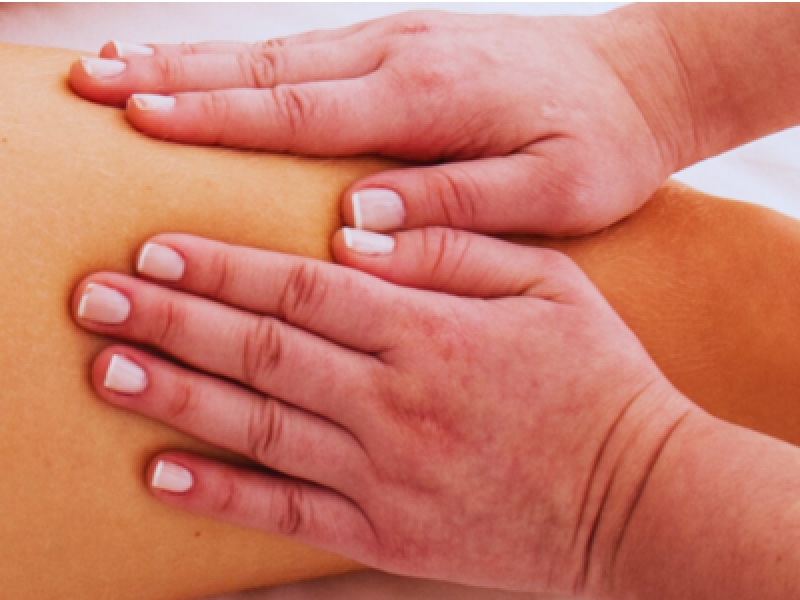
FHT, CMA, BCMA, IGCT & IICT Accredited Course
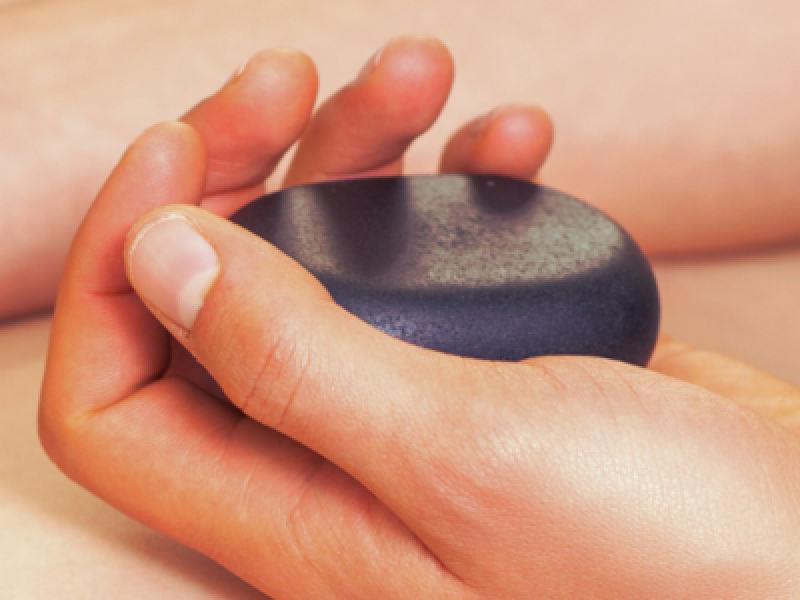
FHT, CMA, BCMA, IGCT & IICT Accredited Course


 Search...
 Introduction
 Course Requirements
 FAQ
FAQ
 Course Dates and Booking